Sourced from Clem’s Organic Gardens
Carrots- Bolero - 10lb Case
Carrots- Bolero - 10lb Case
Before we get into this delightful Bolero carrot grown by Clem’s, I want to share with you a short story about carrots and how we have arrived at this particular carrot available to you today. Carrots trace their roots back to Central Asia — modern-day Afghanistan — where early purple and yellow types were first cultivated. From there, they moved west through trade routes into Europe. By the time carrots reached France, growers began refining them through seed selection and traditional plant breeding methods for tenderness and sweetness, shaping what would eventually become a defining vegetable in French cuisine.
The Nantes Foundation
In the 19th century, around the city of Nantes, French growers selected a carrot that broke from the older, woody field types. The Nantes carrot was bred for ablunt tip, uniform cylindrical shape, deep orange color and primarily for a tender core (coreless), and sweet/mild flavor.
It was developed specifically for market growers — carrots that pulled clean, washed well, and ate well both raw and cooked. That profile carried it across the Atlantic. Nantes types became foundational in American market farming and thus its cuisine because they performed reliably and appealed to consumers who wanted sweetness without bitterness.
This brings us to the arrival of the Bolero carrot after some generations.
Bolero is a modern F1 hybrid bred from the Nantes line.
“F1” stands for “first filial generation.” It means two carefully selected parent lines were crossed to produce a first-generation hybrid that expresses consistent, uniform traits — stronger vigor, better sweetness, and predictable shape. This is at the heart of traditional plant breeding done with care and precision.
Bolero keeps the pure the essence, or soul, of Nantes but improves on it in meaningful ways:
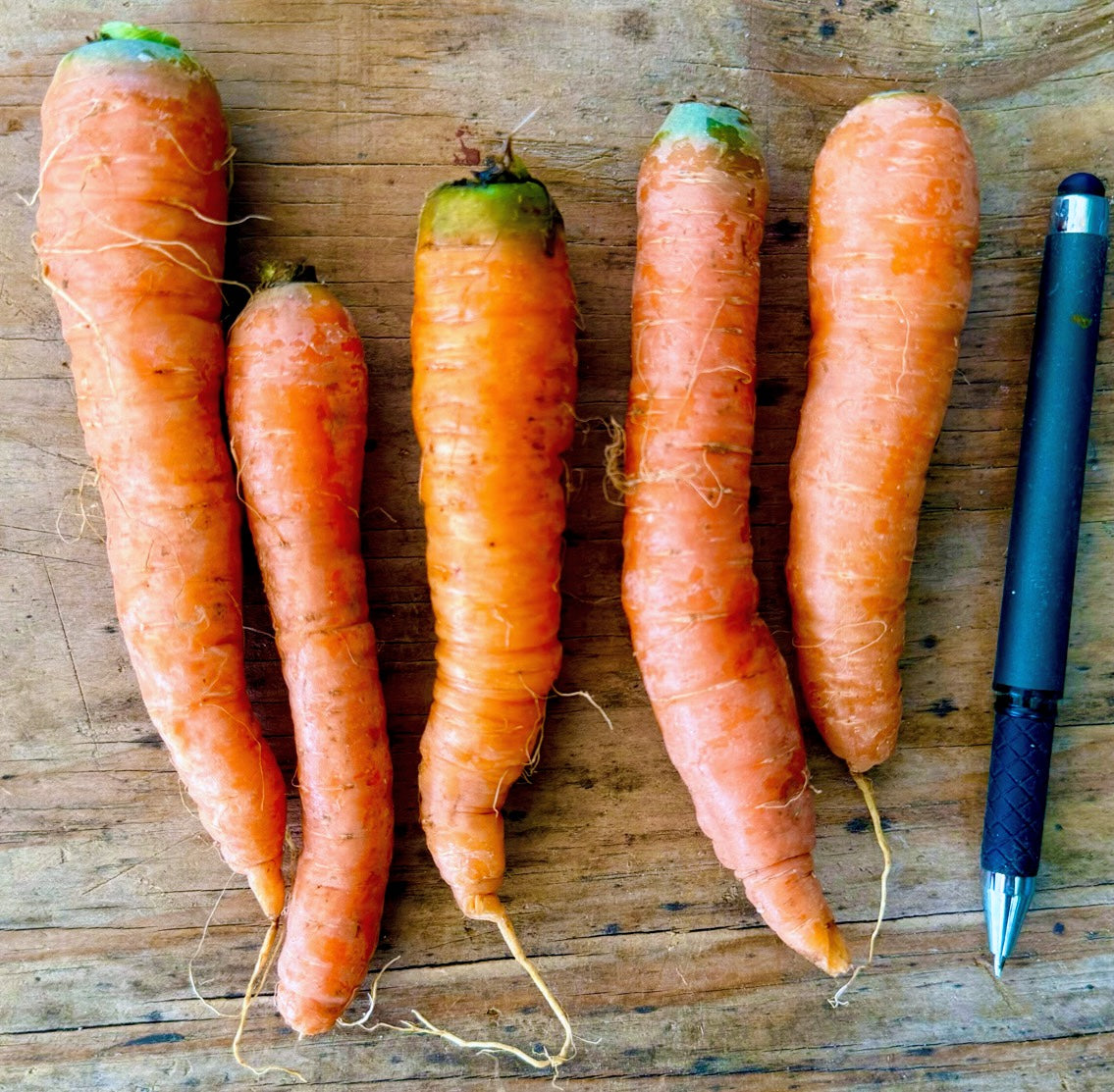
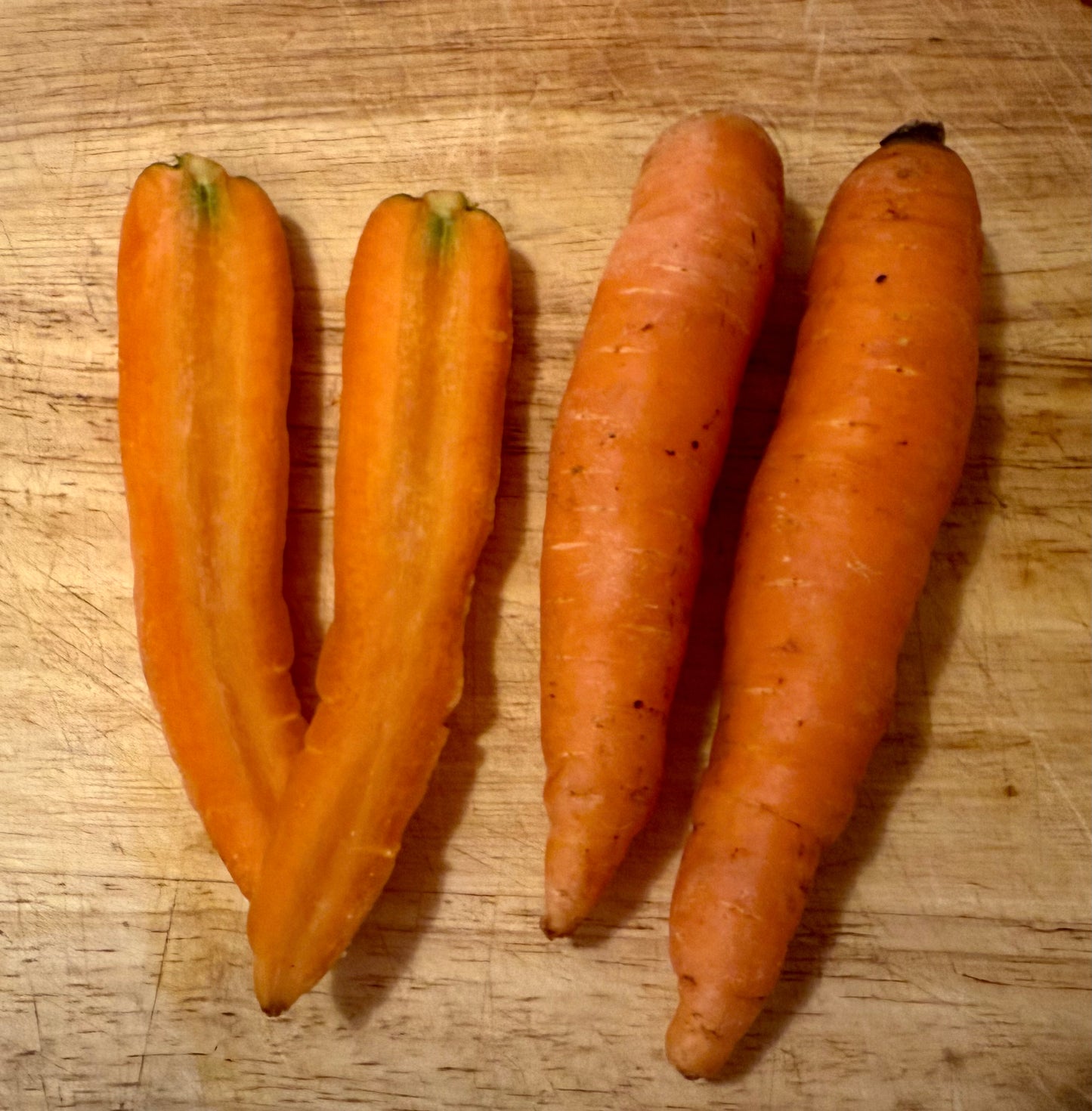
Immediately noticeable, it boasts an extra crisp texture – some serious snap when eaten raw. I had one a few weeks ago right out of Clem’s dirt and a totally volunteer and uncontrolled smile stretched over my face. This is what carrots were meant to be and were like before agricultural geneticists pushed out the flavor genes to make room for shipping and shelf life genes - the carrots most of us grew up eating.
Bolero’s strength lies in its higher natural sugar levels and a unique and very subtle fruit-forward flavor – almost subtle stone-fruit undertones.
But it also brings the farmer improved yield and storability – producing abundant harvests and consistent sizing that holds quality and flavor longer in the cooler.
For the cook, it’s versatile. For the farmer, it’s dependable.
Grown in Clem’s Alluvial Soil
These Boleros are coming out of Clem’s Organic Gardens, planted in rich alluvial soil lying roughly 50 yards from the Davidson River, just below where the French Broad River and Davidson River meet.
Alluvial soil is built by centuries of river movement — sand, silt, and organic matter layered and re-layered by seasonal floods. That kind of ground drains well but holds nutrients, which is exactly what carrots want. Roots grow straight and smooth. Sugars concentrate without stress bitterness. You can taste when a carrot grows in river ground — it finishes clean.
Ways to Use Bolero Carrots
Raw
- Peeled and chilled with good salt and olive oil
- Shaved into salads for crunch
- Cut into batons for dip boards
- Fresh-pressed carrot juice
Cooked
- Slow-roasted whole with thyme and butter
- Glazed with honey and apple cider vinegar
- Pureed into soups (naturally sweet base)
- Charred and served alongside roasted meats
- Braised gently in stock until just tender
Because of its crispness and sugar content, Bolero caramelizes beautifully without collapsing. It holds texture in soups and stews. It’s equally suited to refined plating or a simple Sunday roast.
At the end of the day, Bolero is what careful breeding and good soil can do together — French lineage, modern precision, and river-grown depth — a carrot that works as hard in the field as it does in the kitchen.