Sourced from Bradford Farm
*Cabbage - Charleston Wakefield - 20lb Case
*Cabbage - Charleston Wakefield - 20lb Case
This wonderful 1800s cabbage truly is the most tender and succulent cabbage we’ve ever eaten!
Cooks in mere minutes.
Charleston Wakefield Cabbage was the dominant cabbage of coastal SC in the late 1800s. It was the preferred cabbage for making kraut in the south for its tenderness and fine texture.
This cabbage originated with a grower at Martin's Point, SC (Wadmalaw Island). As with many older open pollinated varieties, despite its superior flavor and other attributes, its fragile nature and tenderness was its Achilles’ heel when it came to shipping great distances. It took a while to get this crop up and running, here at Bradford Farm, but it is here now and has become a favorite among our chefs!
Why do chefs love this cabbage?
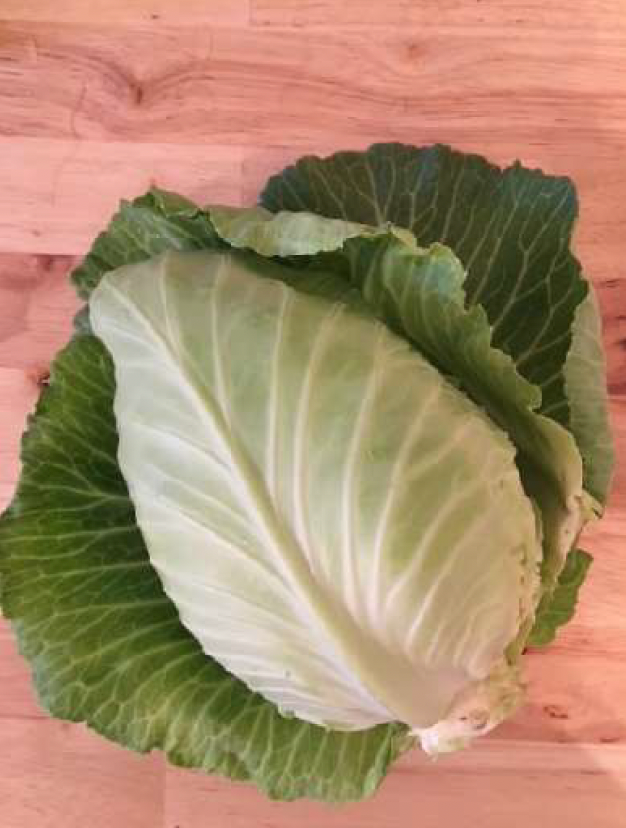
What chefs love first is the structure. That pointed head is not only whimsical, but also functional. The leaves are tender from tip to core, with none of the tough, rubbery midrib fight you get in standard green cabbage. You can shave it paper-thin without reaching for a mandoline, and it collapses into heat with quiet, elegant sweetness that seems more brassica-than-brassica.
The flavor is where it wins people over. The Wakefield has a buttery, clean sweetness with almost a fresh-cut herb quality on the finish. Cook it lightly and you get springtime; cook it hard and you get this roasted-nut depth that tastes like you’re pulling flavor from a much fancier vegetable. Then there’s consistency — tight heads and reliable tenderness throughout. In a kitchen, predictability is currency, and Charleston Wakefield spends like gold!
Applications Chefs Gravitate Toward
Raw:
- Finely shaved slaws and salads
- Bright cabbage ribbons tossed with citrus and good olive oil
- Fish crudo foundations
- Pairing with seafood (its sweetness loves oysters, scallops, and raw crab)
Cooked:
- Split, charred, and basted with brown butter or chicken fat
- Braised in white wine or cider until silky
- Folded into dumpling fillings
- Fermented — it makes shockingly good sauerkraut and kimchi with a gentle, rounded acidity
- Added last-minute to broths for a soft, sweet lift
Some Prep Notes
- Trim the base gently — the outer leaves are usually pristine; don’t discard flavor.
- Quarter along the point, not across the head. This preserves its natural grain.
-
For raw dishes:
- Slice with a long, smooth pull of the knife; avoid sawing, it bruises.
-
For roasting:
- Keep the core intact so the wedges hold together.
- Roast at high heat to blister, then baste over low heat to melt it into tenderness.
-
For braising:
- Start with aromatics in butter or rendered fat.
- Add cabbage, deglaze with acid, cover, and cook until the leaves surrender.
- Season last — it’s a naturally sweet cabbage; salting early can make it collapse too quickly.
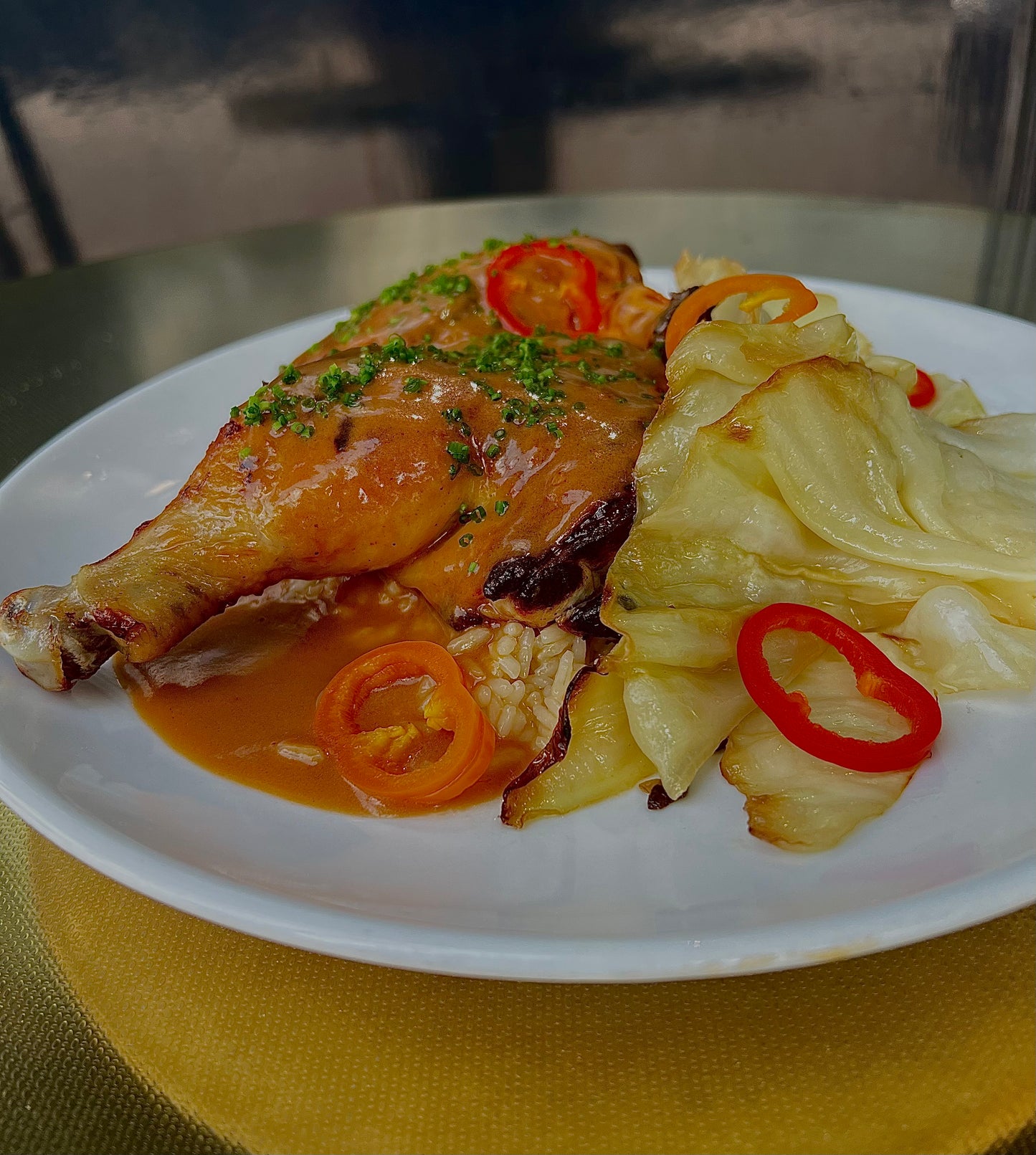
Pictured: Heirloom Charleston Wakefield cabbage with a chicken thigh from Chef Eli Hayes at Jolie - Raleigh, NC